Step Deck Trailer: A Complete Guide to Drop Deck Freight
A step deck trailer lowers its rear deck to gain extra vertical space for tall cargo. This drop deck design lets shippers move machinery, building materials, and agricultural equipment without special height permits. This complete guide covers step deck dimensions, typical freight, and the step deck vs flatbed comparison. IGT Logistics breaks down everything USA shippers need for smarter drop deck trailer choices.
Step Deck Trailer: Design, Purpose, and Core Function
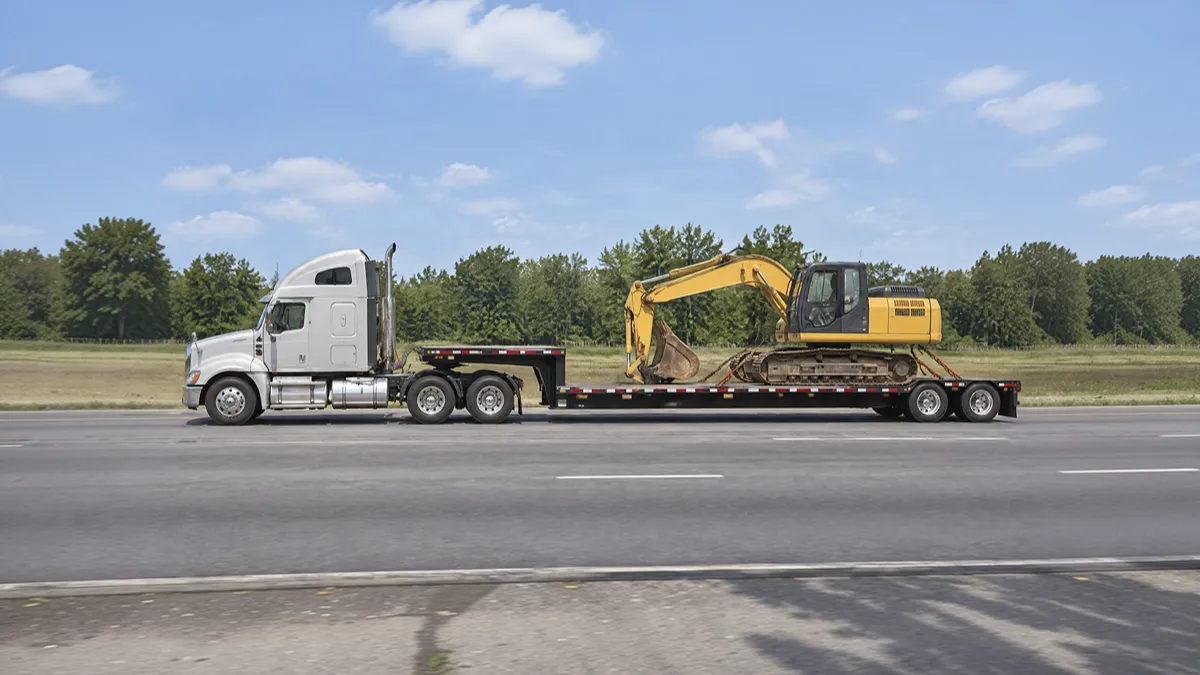
A step deck trailer-frequently utilized as a drop deck trailer-functions as a specialized open deck transport solution engineered with a dual-level frame. The architecture features a raised upper deck at the front and a primary lower deck that sits significantly closer to the pavement. This signature "drop" is the vital structural element that separates the step deck from a traditional flatbed trailer.
In the heavy haul industry, this lowered platform is essential for achieving necessary height clearance. While standard trailers often restrict load height to 8'6", the drop deck design reduces the deck height to roughly 42 inches. This transition provides approximately 20 inches of extra vertical capacity, allowing step deck shipments to accommodate cargo up to 10 feet tall. By utilizing a step deck, carriers can transport oversize freight and RGN-compatible loads while staying under the 13'6" federal limit without specialized permits.
Step Deck Trailer Dimensions: Deck Heights, Length, and Weight Capacity
Step deck trucking demands exact numbers. A step deck trailer (or drop deck trailer) carries freight across two levels. Below are the verified measurements every shipper needs before booking a step deck.
Length - Buyers choose 48‑foot or 53‑foot models. On a 48‑foot unit, the upper deck runs about 10–11 feet forward, while the lower deck extends roughly 37–38 feet rearward. The 53‑foot version allocates approximately 43 feet to the lower deck, leaving 10 feet for the upper deck. This suits lengthy industrial cargo.
Width - Standard 8 feet 6 inches (102 inches). Matching flatbed width avoids extra permits for wide loads on interstate corridors.
Deck Heights - Upper deck sits 60 inches above pavement. Lower deck height measures 40–42 inches (3 feet 4 inches to 3 feet 6 inches). The 18‑20 inch vertical drop between two deck levels generates the clearance advantage.
Maximum Cargo Height - Freight on the lower deck can reach 10 feet (10 feet 2 inches on certain builds). Compare to 8 feet 6 inches on a flatbed. Total rig stays under the federal 13 feet 6 inch ceiling on most routes.
Weight Capacity - Payload ranges from 42,500 to 46,000 pounds. Ground clearance on the lower deck helps stability, but the trailer’s reinforced step section adds tare weight. Subtract that from the 80,000 pound gross vehicle limit to find true load capacity for your cargo.
Step Deck Trailer Types: Fixed Neck, Gooseneck, and RGN
A step deck trailer (or drop deck trailer) comes in three neck configurations. Each serves different loading unloading needs for open deck freight.
Fixed Neck - The most common and cost‑effective design. The neck attaches rigidly to the frame. Loading unloading happens from the rear using a ramp, forklift, or crane. Ideal for cargo that does not require driving onto the deck. Simpler mechanics mean lower tare weight compared to RGN variants.
Standard Gooseneck - Similar to fixed neck but with modified front geometry. This aids weight distribution and tractor pairing on certain heavy haul loads. Still rear‑loaded.
Removable Gooseneck (RGN) - The front section detaches completely, creating a ground‑level ramp. Self‑propelled equipment - excavators, bulldozers, generators - drives directly onto the deck. After loading, the removable gooseneck reattaches for transport. Standard for machinery that cannot be crane‑lifted.
When cargo exceeds a step deck height limit (above ~10 feet), a full lowboy (double‑drop) or dedicated lowboy RGN becomes the correct choice. Its deck sits only 18–24 inches from the ground for extreme‑height oversize loads.
Cargo Types for Step Deck Trailers: Industries and Freight Examples
A step deck handles cargo types that a flatbed cannot. Construction equipment leads the list: excavators, bulldozers, skid steers, loaders, backhoes. Their cabs and booms exceed 8'6" - the step deck trailer eliminates oversize permits for height.
Agricultural machinery follows: tractors, combines, harvesters, balers. These tall loads fit the height clearance of a drop deck. Shorter farm equipment may still use flatbeds.
Industrial machinery includes CNC machines, generators, large HVAC units, industrial presses, prefabricated steel frames, and oversized tanks. All exceed standard flatbed height limits.
Aerospace freight - aircraft parts and fuselage sections - combines height restrictions with high value.
Stacked palletized goods from manufacturing often breach 8'6" at shipping height.
When heavy haul cargo surpasses 10 feet on the lower deck or 8'6" wide, oversize permits become mandatory. At that threshold, a lowboy or RGN serves better.
Step Deck vs Flatbed vs Lowboy: Choosing the Right Open Deck Trailer
The primary difference among these three open deck trailer types is deck height, which sets the maximum legal cargo height without oversize permits. A standard flatbed trailer sits 5 feet high (cargo limit 8'6"). A step deck lowers its rear lower deck to 3.5 feet (cargo limit 10 feet). A lowboy or RGN drops to 18–24 inches (cargo limit ~11'6"+).
Flatbed - Cargo under 8'6". Best for steel, lumber, standard machinery. Lower cost, continuous deck. Secured with straps, chains, binders.
Step Deck - Cargo between 8'6" and 10 feet. Avoids height permits. Forklift or ramp loading at lower angle. Ideal for construction equipment.
Lowboy / RGN - Cargo above 10 feet or drive-on loading for heavy machinery. Higher cost, specialized routing, more permits.
Feature | Flatbed Trailer | Step Deck (Drop Deck) | Lowboy / RGN |
Deck height | ~5 ft (upper deck) | Upper deck | 18–24 inches |
Max cargo height | ~8'6" | ~10 ft | ~11'6"+ |
Legal height limits | Needs permits above 8'6" | Stays under 13'6" total up to 10 ft | Handles extreme heights |
Loading method | Forklift, crane, ramp | Forklift, ramp, crane | Drive-on (RGN) or ramp |
Best for | Steel, lumber, palletized freight | Construction, agricultural machinery | Heavy equipment, excavators, bulldozers |
Cargo securement | Straps, chains, binders | Straps, chains, binders | Straps, chains, binders |
Note: for step deck vs flatbed, the choice depends on cargo height. A step deck adds ~18 inches of clearance. When heavy haul exceeds 10 feet, a lowboy or RGN becomes necessary.
Summary and Key Takeaways:
Step Deck vs Flatbed vs Lowboy: Choosing the Right Open Deck Trailer, Key points:
A step deck uses a dual-level design to transport loads reaching 10 feet in height.
The step deck trailer features 48' or 53' decks with a 46,000 lbs payload limit.
A drop deck trailer is the industry standard for hauling tall industrial machinery safely.
RGN variations allow equipment to be driven directly onto the platform for easier loading.
FAQ
Freight can stand up to 10 feet tall on the bottom platform. This design offers a significant height advantage over flatbeds while ensuring the total load remains beneath the 13'6" federal vertical limit.
The main step deck vs flatbed difference is the frame geometry. A drop deck utilizes a recessed rear section to lower the center of gravity and provide extra vertical clearance for tall industrial assets.
A typical step deck trailer provides a payload capacity of 42,500 to 46,000 lbs. The total weight remains governed by the 80,000 lb federal gross vehicle weight maximum.
Not if the freight stays under 10 feet in height and 8.5 feet in width. If dimensions exceed these legal thresholds, the load is classified as heavy haul and requires specific state permits.
Use a step deck for freight between 8'6" and 10 feet tall. If the cargo is taller than 10 feet or requires drive-on loading, a lowboy or RGN is the appropriate choice.

Ready to simplify your freight shipping?
Move your freight with confidence. Quick quotes, reliable capacity, and a team that actually answers when you call. Get started today with zero pressure and all the answers you need.
Get My Free Quote