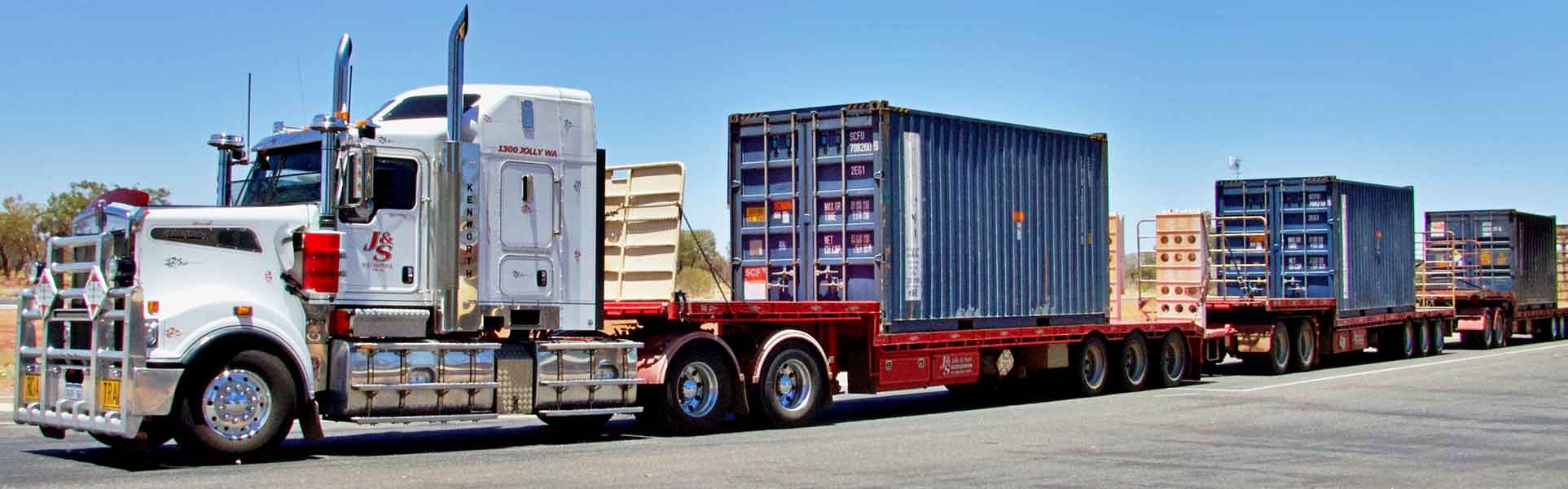
Intermodal Trucking Services: Everything Shippers Need to Know
Intermodal trucking has transformed freight transportation across North America by seamlessly combining the strengths of trucks and railroads. This shipping method keeps cargo enclosed in a single container throughout its journey-moving from truck to train and back to truck without ever handling the actual freight. For shippers managing longer routes, intermodal offers compelling advantages: lower transportation costs, reduced carbon emissions, and access to reliable capacity that remains stable even when trucking markets tighten.
Understanding how intermodal works, where it delivers the greatest value, and what operational factors to consider can help businesses make informed logistics decisions that strengthen their supply chains.
Intermodal Trucking: Scope, Function, and the Truck's Role in Rail-Road Networks
Intermodal trucking is the road-based component of intermodal shipping-the truck service that connects a shipper's facility to a rail terminal at origin and connects the destination rail terminal to the receiver's facility.
Without intermodal trucking, no container can enter or exit the rail network. In road–rail intermodal transportation, the roles are structurally divided: rail handles the long-haul line between intermodal terminals, often covering 1,000–2,500 miles; intermodal trucking services cover the short-haul segments at each end-typically under 100 miles-in a function known as drayage. The Association of American Railroads reports that U.S. freight railroads originated nearly 14 million intermodal loads in 2024. Every single one required at least two intermodal trucking moves-one at origin and one at destination. Intermodal trucking is not a supporting element of the network; it is the mechanism that makes the network function.
Domestic Intermodal and Modal Combinations: Road Service Configurations
Domestic intermodal operates through three primary modal combinations in intermodal transportation, each defined by how rail and truck segments connect. Single-railroad domestic keeps the entire rail leg on one Class I railroad-BNSF, UP, NS, or CSX-with intermodal trucking providing pickup and delivery at both ends. Multi-railroad domestic serves transcontinental lanes where containers interchange between two railroads mid-route, while intermodal trucking remains responsible for origin and destination drayage.
Door-to-door intermodal integrates the full rail+truck sequence under unified coordination. The 500-mile threshold determines when rail becomes cost-competitive with over-the-road trucking using a 53ft domestic container.
Configuration | Lane Scope | Typical Distance | Shipper Responsibility |
Single-Railroad Domestic | Within one railroad's network | 500–1,500 miles | Arranges intermodal trucking at origin and destination |
Multi-Railroad Domestic | Transcontinental across two Class I railroads | 1,500–2,500+ miles | Arranges intermodal trucking; railroads handle interchange |
Door-to-Door Intermodal | Full road–rail–road sequence | Varies by lane | Single point of contact manages entire journey |
Drayage Services: The Trucking Backbone of Intermodal Operations
Drayage services are the specialized intermodal trucking operations that handle container movement between rail terminals and shipper or receiver facilities. They are the first and last physical action in every domestic intermodal move. Origin drayage begins when a drayage carrier collects an empty intermodal container on a chassis from the origin rail ramp and delivers it to the shipper's facility.
Once loaded and sealed, the driver returns it to the ramp and completes the in-gate process-registering the container into the railroad's system for loading onto the train. For destination drayage, the destination drayage carrier picks up the loaded container (out-gate) upon notification and delivers it to the receiver. Chassis availability, ramp appointment slots, and terminal congestion directly affect total transit time.
Drayage services typically operate within a 100-mile radius of each ramp. Inland transport coverage beyond that threshold is considered a local trucking move, not standard drayage. Intermodal trucking services rely on efficient drayage to keep the entire network moving.
Carrier Haulage, Door-to-Door Intermodal, and Multi-Carrier Service Models
Shippers manage logistics through three primary models. Carrier haulage allows the railroad to control drayage legs. Conversely, merchant haulage relies entirely on shipper-controlled drayage.
For maximum efficiency, door-to-door intermodal offers a seamless single-provider service. A single logistics partner manages all legs, which is ideal for a multi-carrier intermodal shipment crossing distinct Class I network coverage areas under a single through bill of lading.
Service Model | Drayage Control | Through Bill of Lading | Primary Use Case |
Carrier | Railroad | Railroad / IMC | Simplified procurement |
Merchant | Shipper | None (Split) | Established drayage rates |
Door-to Door | IMC / 3PL | Single Provider | Interchange handoffs |
Intermodal Containers and Shipping Containers: Domestic Specifications
The 53-ft domestic intermodal container is the standard equipment unit of North American road–rail intermodal trucking. It matches the interior length of a standard dry van trailer-the most common truckload unit making containerized freight conversion between truck and rail straightforward.
Domestic 53-ft intermodal containers ride on railroad double-stack well cars, with two containers stacked vertically per well car position, maximizing train capacity per mile of track. The 40-ft international container handles import ocean freight moving directly on-rail without transloading. For shipping containers in intermodal service, shippers must secure pallets using dunnage bags, load bars, or 2×4 bracing to prevent load shift across crane lifts, rail vibrations, and drayage movement. Properly secured intermodal trucking loads reduce cargo claims across all three legs.
Specification | 53-ft Domestic Container | 40-ft International Container |
Length | 53 feet | 40 feet |
Primary Use | Domestic road–rail intermodal | Ocean import/export freight |
Rail Configuration | Double-stack well car (two high) | Single or double-stack |
Dry Van Equivalent | Matches standard 53-ft trailer | Shorter than domestic standard |
Cargo Handling | Blocking and bracing required | Blocking and bracing required |
Transloading in Intermodal Trucking: Container Swaps and Inland Flexibility
Transloading transfers cargo from one container type to another at an intermediate facility-most commonly from a 40-ft international ocean container into a 53-ft domestic intermodal container for inland rail distribution. In intermodal trucking operations, transloading adds a drayage move to the transload facility before the domestic rail leg begins. This additional step produces net advantages on high-volume inland lanes: 53-ft domestic containers are more widely available in the Class I container pool, more compatible with standard U.S. warehouse dock heights, and often generate lower per-unit rail costs than routing international containers inland.
Transloading enables flexible routing for import freight requiring distribution across multiple domestic destinations.
Cost Savings, Fuel Efficiency, and Supply Chain Gains in Intermodal Trucking
Intermodal trucking delivers measurable advantages across three dimensions:
COST SAVINGS: Rail hauls freight at a structurally lower cost per mile than road. For lanes exceeding a 500-mile break-even, cost-effective shipping through domestic intermodal typically reduces transportation spend by several hundred to several thousand dollars per load compared to over-the-road truckload.
FUEL EFFICIENCY: Rail moves one ton of freight approximately 479 miles on a gallon of fuel - roughly four times the fuel efficiency of road. For shippers with sustainability commitments, integrated logistics through intermodal directly reduces the carbon intensity of each shipment via carbon reduction.
SUPPLY CHAIN EFFICIENCY: The North American Class I railroads operate a shared pool of over 100,000 domestic 53-ft containers, accessible through IMCs. Incorporating intermodal trucking into supply chain planning diversifies capacity access independently of the truckload spot market - providing a driver shortage offset and reducing exposure to peak-season rate spikes.
Supply Chain Visibility and End-to-End Logistics Across All Intermodal Legs
Supply chain visibility across an intermodal move requires integrating data from three separate parties-origin drayage, railroad, and destination drayage-each operating in its own system. Intermodal trucking services rely on IMCs and door-to-door providers to consolidate this data into a single end-to-end logistics view: in-gate/out-gate timestamps at each rail ramp, container tracking by alphanumeric identifier throughout the rail leg, and automated destination notifications when the container clears the destination ramp. This unified view enables shippers to anticipate delays, manage receiver scheduling, and act on exceptions before they cascade into missed delivery windows.
Key Takeaways
Intermodal trucking is the road-based drayage service connecting shipper facilities to rail terminals - the first and last leg of every domestic intermodal move.
Domestic intermodal uses 53-ft containers on Class I railroads; the 500-mile threshold is the general break-even point for truckload conversion.
Three intermodal trucking service models - carrier haulage, merchant haulage, and door-to-door intermodal - differ in who controls drayage and owns accountability.
Transloading transfers international 40-ft containers into domestic 53-ft containers for more efficient inland rail distribution.
Rail is four times more fuel-efficient than road - making intermodal trucking services a direct lever for both cost reduction and sustainability targets.
FAQ
Drayage services account for a significant share of total intermodal transit time. Chassis availability at the rail ramp, appointment slot availability, and terminal congestion all directly affect how quickly the container enters and exits the rail network.
Under carrier haulage, the railroad or its contracted drayage fleet controls both trucking legs. Under merchant haulage, the shipper independently arranges and manages its own drayage carriers at origin and destination, retaining control over provider selection and rate negotiation.
No. Door-to-door intermodal places the entire move-origin drayage, rail line-haul, and destination drayage-under one intermodal provider. Multi-carrier intermodal moves that cross two railroad systems are coordinated by the provider, with a single invoice and single point of accountability.
Transloading into a 53-ft domestic container is preferable when inland distribution infrastructure is designed for the domestic container standard, when domestic container pool availability is higher than international equipment, or when per-unit rail costs favor the larger domestic container on the target lane.
Ready to simplify your freight shipping?
Move your freight with confidence. Quick quotes, reliable capacity, and a team that actually answers when you call. Get started today with zero pressure and all the answers you need.
Get My Free Quote