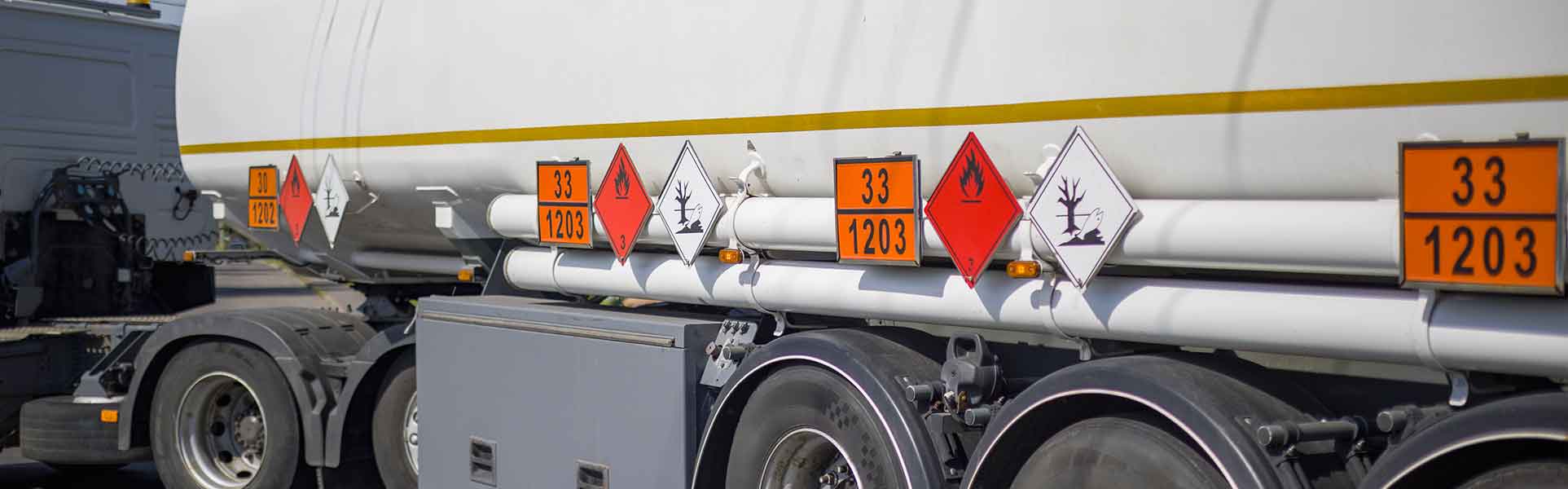
Hazmat Shipping: How It Works
Moving hazardous materials across the country requires more than just loading and driving - it demands strict adherence to federal safety protocols. The United States designates certain substances as hazardous when they carry the potential to threaten health, infrastructure, or ecological systems while in transit. These materials range from common household goods like batteries, aerosol sprays, and cleaning agents to industrial-grade chemicals and fuels.
A successful hazmat shipment follows a precise workflow: determining the substance's exact classification, choosing regulation-compliant packaging, applying standardized hazard labels, affixing vehicle placards, completing required shipping documents, and ensuring drivers hold proper endorsements. Each step minimizes risk and safeguards everyone involved.
Hazmat Transportation: The Nine DOT Hazard Classes Explained
Hazmat shipping structures the operational workflows required to move high-risk freight without compromising public safety or regional ecosystems. Dictated by the 49 CFR rulebook, oversight bodies like PHMSA mandate that volatile commodities be organized into nine distinct hazard groups reflecting their molecular behaviors:
Class 1: Explosive materials
Class 2: Compressed gases
Class 3: Flammable liquids
Class 4: Combustible solids
Class 5: Peroxides and oxidizing agents
Class 6: Toxic or infectious compounds
Class 7: Radioactive elements
Class 8: Corrosive matter
Class 9: Miscellaneous regulated goods
Freight coordinators review Section 14 of the product's Safety Data Sheet (SDS) to verify its official UN identification number and designated shipping name. Strict compliance protocols demand industrial-grade packaging to intercept leakage, distinct diamond-shaped external placards for transit vehicles, and unambiguous shipping papers. Lastly, commercial drivers must clear background screenings and hold a specialized hazmat endorsement to legally move these controlled substances.
DOT Hazmat Regulations: Federal Requirements and International Framework
Navigating hazmat compliance in the United States requires strict adherence to federal law. Codified under Title 49 of the Code of Federal Regulations (49 CFR), specifically Parts 171–180, these laws are collectively known as the Hazardous Materials Regulations (HMR). Administered by PHMSA, this legal framework dictates rigorous DOT hazmat requirements for all supply chain participants handling dangerous goods.
Shippers must accurately categorize inventory against the official hazardous materials table, implement mandated packaging, and satisfy every hazmat training requirement every three years. For global transit, distinct operational standards apply, including the IMDG Code for maritime freight and ADR for European road transport. Ignoring these DOT hazmat regulations triggers aggressive enforcement, resulting in severe civil penalties reaching up to $84,425 per daily infraction.
Hazmat Packaging: Performance Standards, Packing Groups, and Container Requirements
Proper hazmat packaging is a legally specified requirement under 49 CFR Part 173. Shippers must ensure all configurations-including single packaging or combination packaging-meet strict UN performance standards.
Packing Groups and Hazards
Materials are assigned to specific packing groups I/II/III to reflect their unique hazard levels. This determination directly dictates the required structural strength of the containers to ensure absolute hazmat compliance during transit. Furthermore, strict compatibility requirements must be met to guarantee that chemicals do not react with or corrode the chosen container material.
Packing Group | Hazard Level | Examples | Packaging Stringency |
PG I | High hazard | Certain flammable liquids, toxic materials | Most stringent requirements |
PG II | Medium hazard | Gasoline, corrosive acids | Standard performance packaging |
PG III | Low hazard | Consumer chemicals, some pesticides | Less stringent requirements |
Strict hazmat compliance also relies on adhering to specific quantity limits, though some shipments may qualify as excepted quantities. All certified boxes, whether new specification packaging or verified reconditioned packaging, must display the official UN mark. Maintaining an exact understanding of these hazmat packaging rules ensures safer roads.
Hazmat Labeling, Placards, and Hazmat Symbols: How Hazard Communication Works
Every compliant shipment depends on strict hazmat labeling and packaging protocols. Individual packages require 4-inch diamond labels affixed directly to the container. These color-coded indicators display specific hazmat symbols, DOT hazard classes, and division numbers.
For larger bulk shipments, carriers rely on hazmat placards. These expanded 10.8-inch signs provide high-visibility vehicle marking on freight trailers. Beyond basic hazmat labeling, packages must clearly show details like the proper shipping name, a 4-digit UN identification number, and orientation arrows for liquid freight to ensure flawless handling throughout transit.
Hazmat Shipping Papers and Safety Data Sheets: Required Documentation
Moving regulated freight across domestic trade lanes depends on an immutable pair of compliance instruments. Shippers must issue valid hazmat shipping papers-customarily formatted as a dedicated bill of lading-stating the chemical's proper shipping name, hazard class, UN identification number, and an active emergency contact number. Commercial drivers must respect exact driver document location requirements by keeping these hazmat shipping papers within arm's reach inside the truck cab. Additionally, manufacturers must supply updated safety data sheets (SDS) to provide immediate hazard and emergency response information to every terminal handler across the supply chain.
Hazmat Incident Response: Carrier Obligations and Emergency Protocols
When a hazmat incident response or release occurs during hazmat shipping, a defined protocol activates immediately. Transport carriers and drivers are legally bound to stop, assess the risk, isolate the area, and consult the Emergency Response Guidebook (ERG).
They must contact the 24-hour emergency number on the shipping papers or CHEMTREC. Finally, notifying first responders and filing a PHMSA incident report within 30 days is mandatory for any regulated spill or evacuation. Efficient hazmat incident response relies heavily on this preparedness.
Key Takeaways
Hazmat refers to hazardous materials - substances classified across nine DOT hazard classes based on the type of risk they pose during transportation .
DOT hazmat regulations under 49 CFR govern every party in the hazmat shipping chain: shippers, carriers, and forwarders - with penalties up to $84,425 per violation per day .
Hazmat packaging must meet UN performance-oriented standards and be assigned to Packing Group I, II, or III based on the degree of hazard .
Hazmat labeling requires class-specific diamond labels on packages, placards on vehicles, and standardized markings including proper shipping name and UN number .
Every regulated hazmat shipping shipment requires two core documents: hazmat shipping papers and Safety Data Sheets (SDS) - both must be accessible throughout transport
FAQ
The DOT classifies hazardous materials into nine hazard classes - from explosives (Class 1) to miscellaneous hazardous materials (Class 9) - based on the primary risk the substance poses during transport. Each class has defined hazmat packaging, labeling, and placarding requirements.
Packing Group I indicates high hazard and requires the most stringent certified hazmat packaging. Packing Group II is medium hazard with standard performance requirements. Packing Group III is low hazard with less stringent packaging specifications. These packing groups directly determine the level of protection required for safe transport.
Hazmat labels are small diamond-shaped markings affixed to individual packages — minimum 3.9 inches per side. Hazmat placards are large diamond signs — 10.8 inches per side — affixed to vehicles and containers when transporting hazmat above specified quantity thresholds. Both are essential components of hazmat shipping compliance.
Any person or company that offers, accepts, transports, or handles hazardous materials in commerce is subject to DOT hazmat regulations — including shippers, carriers, freight forwarders, and warehouse operators who handle regulated materials. Proper types of hazmat classification and documentation, including safety data sheets (SDS), are mandatory.
A written incident report must be filed with PHMSA within 30 days of any qualifying hazmat release, death, serious injury, evacuation, or closure of a major transportation artery. Immediate telephone notification is also required for the most serious incidents, with CHEMTREC available for emergency response assistance.

Ready to simplify your freight shipping?
Move your freight with confidence. Quick quotes, reliable capacity, and a team that actually answers when you call. Get started today with zero pressure and all the answers you need.
Get My Free Quote