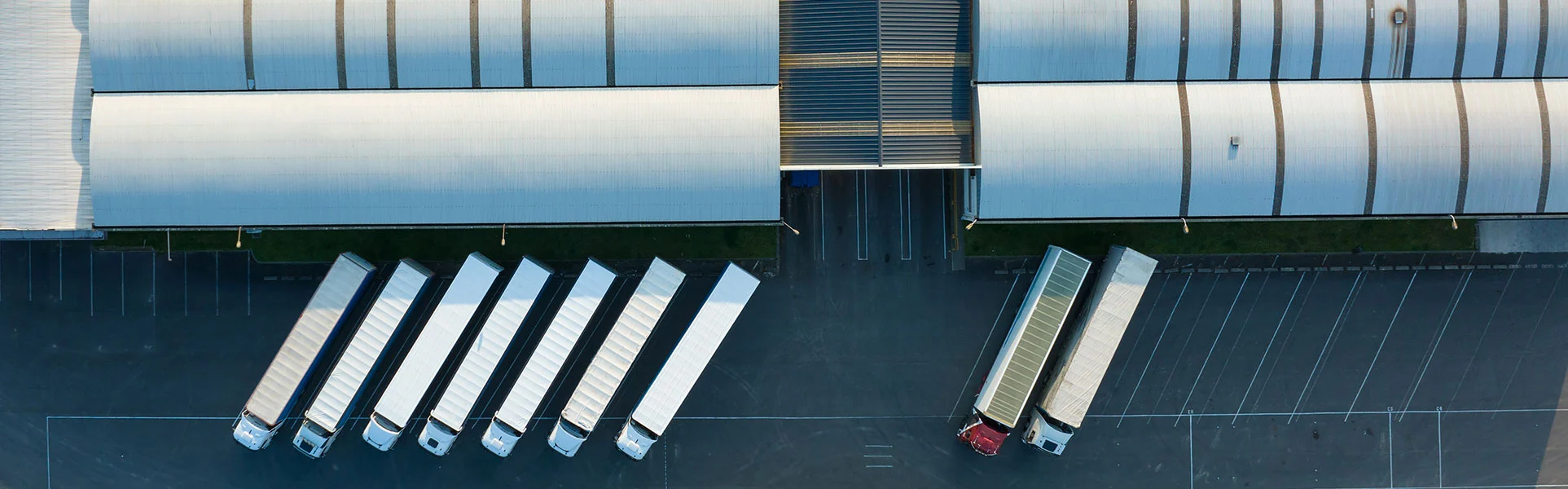
3PL Logistics Made Simple: Meaning, Benefits & Real-World Examples
Running your own warehouse and trucks gets expensive fast. A lot of companies in the US just hand that stuff over to a 3PL. They store the product, ship it, pick and pack orders, watch the inventory, and deal with returns. You skip the big bills for buildings and equipment, get people who actually know logistics, and can scale up or down without a headache.
Tracking usually gets better too. This piece breaks down what 3PL really is, the main reasons people use it, the different types you’ll run into, and some actual examples from real businesses.
This article explains what 3PL really means, highlights the benefits that actually move the needle, and shares how real businesses have made it work for them.
3PL Logistics: Scope, Role, and the Outsourcing Model
A 3PL - third-party logistics provider - takes over critical supply chain functions like warehousing, packing, and freight dispatch. Offloading these operations to a 3PL turns heavy overhead into a flexible variable cost model that grows or shrinks with actual freight volume.
Companies usually work under asset-based setups with owned trucks or non-asset-based networks that coordinate independent drivers. Today, most 3PL logistics specialists run non-asset models, giving each shipper broader access to software and carrier capacity.
Market data puts the US logistics provider space over $230 billion, with 82% of American shippers outsourcing at least part of their carrier procurement.
Types of 3PL Providers: Four Operational Categories
The types of 3pl logistics providers break down by what they actually do. Warehouse-based ones run the buildings-storage, inventory, picking and packing. Transportation-based outfits handle the moves: brokerage, finding carriers, truckload, LTL, intermodal. Most of the North American trucking ones work this way.
Financial and IT-based skip the trucks and warehouses; they audit freight bills, process payments, and manage the data. Managed 3PL services sits on top and runs the whole chain for you under one agreement. That’s how the main 3PL services get delivered.
Type | Primary Function | Example Services |
Warehouse-Based | Storage & fulfillment | Inventory, picking, packing, returns |
Transportation-Based | Freight movement | Brokerage, carrier management |
Financial & IT-Based | Cost & data management | Audit, payment, analytics |
Managed Services | End-to-end oversight | Multi-provider coordination |
Core 3PL Services: Warehousing, Fulfillment, and Transportation
3PL services cover everything from receiving goods to getting them to your customers.
WAREHOUSING AND FULFILLMENT - You ship inventory to them. They check it in, put it on shelves, and pull items when orders come through.
ORDER FULFILLMENT - The whole process from when a customer clicks "buy" to when the package leaves the building.
TRANSPORTATION MANAGEMENT - Finding the right carriers, working out rates, and deciding between FTL, LTL, or intermodal. They also check freight bills for errors.
INVENTORY MANAGEMENT - Keeping an eye on stock levels, setting up automatic reorder points, and predicting what you'll need down the road.
FREIGHT BROKERAGE - Finding trucks for shippers who don't have contracts with carriers. This is the number one thing companies outsource to 3PLs in North America.
REVERSE LOGISTICS - Handling returns, checking what comes back, putting good items back on the shelf, and getting rid of the rest.
Service | What It Does | Example |
Warehousing & Fulfillment | Stores inventory and manages orders | Receiving pallets, pulling items for orders |
Order Fulfillment | Processes orders from start to ship | Picking, packing, printing labels |
Transportation Management | Moves freight, negotiates rates | Booking FTL, LTL, or intermodal |
Inventory Management | Tracks stock and forecasts needs | Real-time counts, automatic reorder |
Freight Brokerage | Finds carriers for shippers | Connecting shippers with trucking companies |
Reverse Logistics | Handles returns and restocking | Inspecting returns, restocking goods |
The Advantages of 3PL Logistics: Five Reasons Businesses Outsource
The advantages of 3PL logistics go well past simple cost cutting. Companies of every size lean on logistics outsourcing for five solid reasons.
First, cost savings. Providers pool volume across thousands of shippers, so they lock in carrier rates and warehouse costs no single business can get on its own. Fixed costs turn into variable ones that track actual volume.
Second, carrier network scale. A non-asset provider can reach hundreds of thousands of trucks at once - coverage most shippers could never build through direct deals.
Third, scalability and growth. Capacity ramps up for peak season and drops when things slow down. No idle trailers, no extra staff, no long-term leases sitting empty.
Fourth, expertise and compliance. Their teams already know carrier performance scores, freight rules, tariffs, and customs. Building that knowledge in-house takes years and serious money.
Fifth, focus on core business. Once the logistics side is handed off, leadership can put time and cash into product, marketing, and customers instead of chasing rates or managing warehouse schedules.
That’s why so many firms keep using a 3PL year after year.
3PL and 4PL: Two Distinct Logistics Models
Quick primer on third-party logistics: how 3PL providers handle warehousing, transport, and fulfillment to boost speed, visibility, and scalable capacity for U.S. shippers.
3PL (Third-Party Logistics) | 4PL (Fourth-Party Logistics) |
Executes logistics | Optimises supply |
Warehousing; fulfillment; transport | All above + strategy |
Manages contracted tasks | Integrates full chain |
Task-level efficiency | Overall performance |
Specific logistics execution | Full supply optimization |
It is important: Industries That Rely on 3PL
A third-party logistics network empowers diverse commercial sectors through specialized 3PL capabilities:
E-COMMERCE AND RETAIL - Brands scale e-commerce fulfillment via strategically placed distribution centers, unlocking rapid last-mile delivery.
MANUFACTURING AND AUTOMOTIVE - Assembly lines utilize precision 3PL routing to streamline inbound raw components and outbound finished vehicles.
PHARMACEUTICALS AND MEDICAL - Temperature-controlled cold chain networks maintain crucial regulatory compliance for sensitive clinical supplies.
FOOD AND BEVERAGE - Specialized refrigerated 3PL facilities enforce strict FDA stock rotation standards for perishable goods.
Key Takeaways
A 3PL - a third-party logistics partner - reshapes warehousing, transport, fulfillment, and inventory into agile, variable‐cost services.
Four provider categories exist: warehouse specialists, transportation experts, financial/IT service firms, and managed logistics partners.
Core strengths include reduced overhead, access to vast carrier networks, scalability, compliance expertise, and freeing resources for growth.
A 3PL delivers contracted logistics functions, while a 4PL integrates multiple providers and manages the supply chain strategically.
Industries using 3PL include e‐commerce, manufacturing, pharmaceuticals, and food and beverage - wherever large‐scale shipping is critical.
FAQ
They aggregate volume from many shippers, securing rates often better than direct deals.
WMS and API integrations process orders from all channels automatically with channel-specific packaging and labeling.
When overseeing multiple providers in complex chains and requiring one partner accountable for total performance.
Integrations with carriers and facilities feed one dashboard of milestones, inventory, and status for early exception action.
Latest insights and useful articles
Stay informed with the latest trends and educational resources in the freight industry. Our experts share helpful tips on optimizing supply chains, navigating complex shipping regulations, and choosing the most efficient transport modes for your business. Whether you are looking to reduce costs or improve delivery times, our articles provide the professional guidance you need to keep your logistics moving forward with confidence and clarity
Logistics
Advanced Shipping Notice (ASN): Benefits for Faster Receiving and Fewer Errors
An ASN tells the buyer what’s coming before the truck arrives. See ASN data fields, the EDI 856 format, and how it speeds receiving and prevents costly errors.
The Complete Guide to Reverse Logistics: Types, Strategies, and Best Practices
Reverse logistics explained: types, returns process stages, sustainability, and proven strategies to cut costs and recover value from returned goods.


Ready to simplify your freight shipping?
Move your freight with confidence. Quick quotes, reliable capacity, and a team that actually answers when you call. Get started today with zero pressure and all the answers you need.
Get My Free Quote